
What Season 2 Taught Me About Artifacts
Enjoying the show? Support it here.
Season 2 of Artifacts was an experiment.
After a first season built around the objects and technology we remember, I wanted to try something different, starting with the experiences technology changed rather than the artifacts themselves.
Looking back, I'm glad I did. Not because I think every experiment worked perfectly, but because it helped me understand what makes Artifacts feel like Artifacts.
In this bonus episode, I look back at Season 2, the things I learned along the way, the one-star shareware review that reminded me to keep questioning my research, and why Season 3 is going back to the things themselves.
Get Involved
If you enjoy Artifacts, you can support it with either a one-off tip, or become a monthly Archivist.
No commitment - just a simple way to say thanks. Show your support here.
If you enjoy the show, I'd love for you to leave a rating or review on your favourite podcast app!
And please let your friends know they can listen for free on Apple Podcasts or their preferred podcast app, or online at Artifacts Podcast.
The Archive
The sister newsletter to the Artifacts podcast, sharing a story that didn't quite fit into an episode, a forgotten corner of the internet I've stumbled across, or a memory that deserves preserving before it quietly fades away.
Products I Use for Artifacts
Note: these may contain affiliate links, so I get a small percentage of any product you buy when using my link.
My equipment:
- RODE NT1-A large diaphragm condenser mic
- Rodecaster Pro II audio production studio
- Sony MDR-7506 Studio Monitor Headphones
- Elgato Wave Mic Arm Low Profile
Recommended resources:
Transcript
Hey there, Danny here, and welcome to a little bonus episode of Artifacts.
Speaker:Season 2 has just come to an end, and before I disappear back into the archive
Speaker:to start recording and editing Season 3, I just want to take a little time to
Speaker:look back at this season.
Speaker:When I started this season, I wanted to do something different.
Speaker:Season 1 was very much about the things we remember.
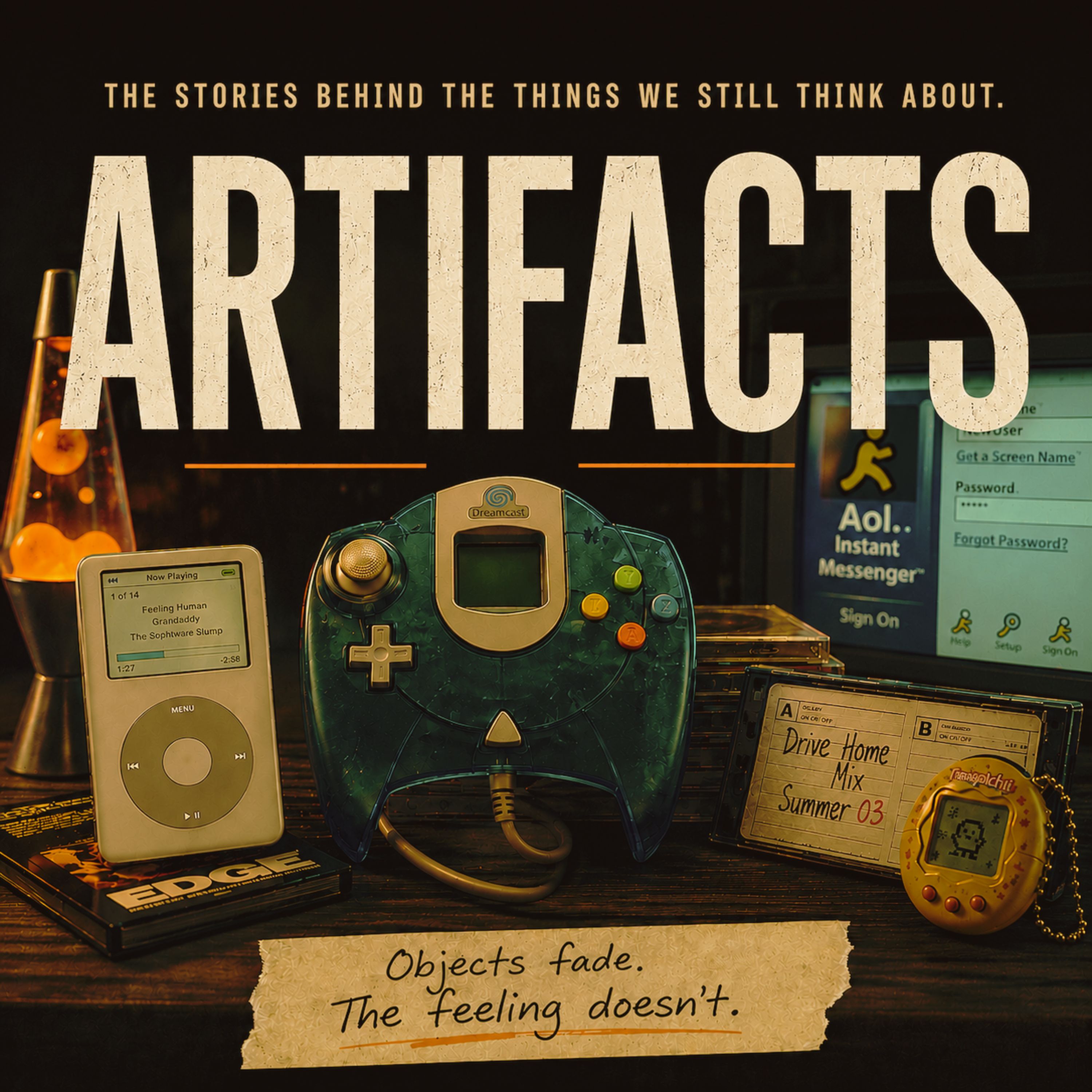
Speaker:Burned CDs, the Dreamcast, old internet forums, AIM away messages,
Speaker:the family computer, and all those other pieces of technology and internet culture
Speaker:that carried far more meaning than we may have realised at the time.
Speaker:For season two, I want to turn that around a little. Instead of starting with
Speaker:an object and following the emotional story underneath it, I want to start with
Speaker:the experiences technology had changed.
Speaker:Waiting, discovery, ownership, sharing, trust.
Speaker:Those little things that technology changed without us necessarily noticing
Speaker:it was happening. And I'm glad I did.
Speaker:Not necessarily because I think it was the better approach, but because I think
Speaker:you have to experiment with something before you really understand what it is.
Speaker:Looking back across the season, there are episodes I'm really happy with.
Speaker:And there are some that have made me realise the original artifacts formula
Speaker:was stronger than I gave it credit for.
Speaker:There's something about starting with a physical object, a piece of technology,
Speaker:a piece of software, or some forgotten artifact, and then fall on a story underneath
Speaker:it that gives the show its identity.
Speaker:The object gets us through the door. The history gives us the context.
Speaker:But what happened around that object, the memories, the people,
Speaker:the experiences and the feelings, that's really what I'm interested in.
Speaker:So that's something I'm taking into season three.
Speaker:Not because I want Artifacts to become a straightforward nostalgia podcast.
Speaker:I'm not really interested in spending 40 minutes telling you that everything
Speaker:was better in 1997, because it wasn't.
Speaker:But I am interested in the things we used to have around us.
Speaker:A memory card isn't just a memory card when you've got 20 hours of a game saved on it.
Speaker:A software box isn't just cardboard when it's the thing you carried home after
Speaker:saving up for months to buy it.
Speaker:An old internet service isn't just a piece of technology when it's where you met people,
Speaker:discovered music, built something, or spent half your teenage years.
Speaker:That's the part I want to keep exploring. Find the artifact first,
Speaker:then find the feeling inside it.
Speaker:And there's another thing this season reminded me of, which is perhaps a little less comfortable.
Speaker:The importance of being willing to listen when somebody tells you you've missed something.
Speaker:A couple of weeks ago, the Shareware episode received a one-star review on Apple Podcasts.
Speaker:The review pointed out that it hadn't made one important part of the Shareware story clear enough.
Speaker:Shareware wasn't one single model, and some versions could restrict features,
Speaker:limit usage, or lock parts of the experience until you registered.
Speaker:Now, the episode does touch on these limitations, but the criticism was fair.
Speaker:I hadn't given that part of the history enough attention.
Speaker:Now, I'll admit, one star felt a little harsh for one omission in a nine-minute
Speaker:episode. But that's also the point.
Speaker:It's very easy to see a negative review, disagree with the rating and move on.
Speaker:But it's much more useful to ask whether there's actually something underneath
Speaker:the criticism that you can learn from. And in this case, there was.
Speaker:So I went back to the research, dug further into the different shareware models,
Speaker:checked the history again and made a correction to the episode.
Speaker:And that's something I want to carry forward.
Speaker:Artifacts isn't going to get everything right every time: I'm one person that
Speaker:remembers living in that time but I also need to research, write,
Speaker:record and produce this thing and there will always be something that I could
Speaker:have explained better or dug into further,
Speaker:and I do want to make sure I'm doing the work.
Speaker:If something's missing, I'd rather somebody point it out and give me the opportunity
Speaker:to fix it than convince myself that it doesn't matter,
Speaker:That's really important with Artifacts because the whole point of the show is
Speaker:preserving these little pieces of history before they disappear.
Speaker:If I'm going to tell these stories, I owe it to the people like me who remember
Speaker:them, and to the people who didn't live through them, to get the history right.
Speaker:Now that doesn't mean the show needs to become a dry history lesson. Quite the opposite.
Speaker:The research is there to give the story a foundation.
Speaker:The reason I'm telling the story in the first place is because somewhere underneath
Speaker:all these details is something that still means something to somebody.
Speaker:And that's what I keep coming back to. Because the more I make Artifacts,
Speaker:the more I realise that I'm not really interested in whether a piece of technology was good or bad.
Speaker:I'm interested in what it meant.
Speaker:Why did we keep it? Why did we care about it? What did it represent?
Speaker:And who did we share it with?
Speaker:And why can something we haven't touched in 20 years still take us straight
Speaker:back to a particular person, place or version of ourselves?
Speaker:Those are the stories I want to keep telling. And there's already plenty of
Speaker:things sitting in the archive waiting for us.
Speaker:Old hardware, forgotten software, game accessories, internet services that disappeared
Speaker:years ago, music platforms that once seemed completely ordinary but now feel
Speaker:like little time capsules.
Speaker:So Season 3 is going to start there. Back with the things, back with the artifacts,
Speaker:and then we'll see where they take us.
Speaker:Before I go, I do want to say thank
Speaker:you though. Whether you've listened to every episode of Season 2 or 1,
Speaker:discovered the show halfway through, sent me an email, left a review,
Speaker:corrected something, suggested an artifact or just listened every week,
Speaker:it genuinely means a lot.
Speaker:This show exists because people still care about these things, and every time
Speaker:somebody tells me about the old computer they still have in the attic,
Speaker:the game they can't throw away, the website they remember or the piece of technology
Speaker:that reminds them of somebody they loved, it reminds me why I started making
Speaker:Artifacts in the first place.
Speaker:If you'd like to support the show, the easiest thing you can do is listen,
Speaker:share an episode with somebody who might enjoy it, or leave a rating or review wherever you listen.
Speaker:If you want to help a little more, there's the Archivist Membership,
Speaker:which helps cover the research, writing, production, sound, hosting,
Speaker:and all the other things that go into each season.
Speaker:There's also a one-off tip option if subscriptions aren't your thing.
Speaker:Both are available at the Artifacts website, and I'll leave a link in the show
Speaker:notes so you can check these out.
Speaker:But you don't have to do any of that. Being here is enough.
Speaker:Season 2 was a little experiment. It took Artifacts somewhere slightly different
Speaker:and I'm glad I let it do that, because it did help me understand the show better
Speaker:now than I did when I started.
Speaker:And that's probably the best thing a season of a podcast can give you.
Speaker:A clearer idea of where you're going next.
Speaker:So, Season 2 is done, but the archive is still open. And I've got a few things
Speaker:waiting to be pulled out.
Speaker:Season 3 drops on October 9. I'll see you there.