
The Memory Cards We Couldn't Bear to Lose
Enjoying the show? Support it here.
There was a time when saving a game meant writing down a password, carefully copying a code from the screen, or trusting a little piece of plastic not to lose your progress.
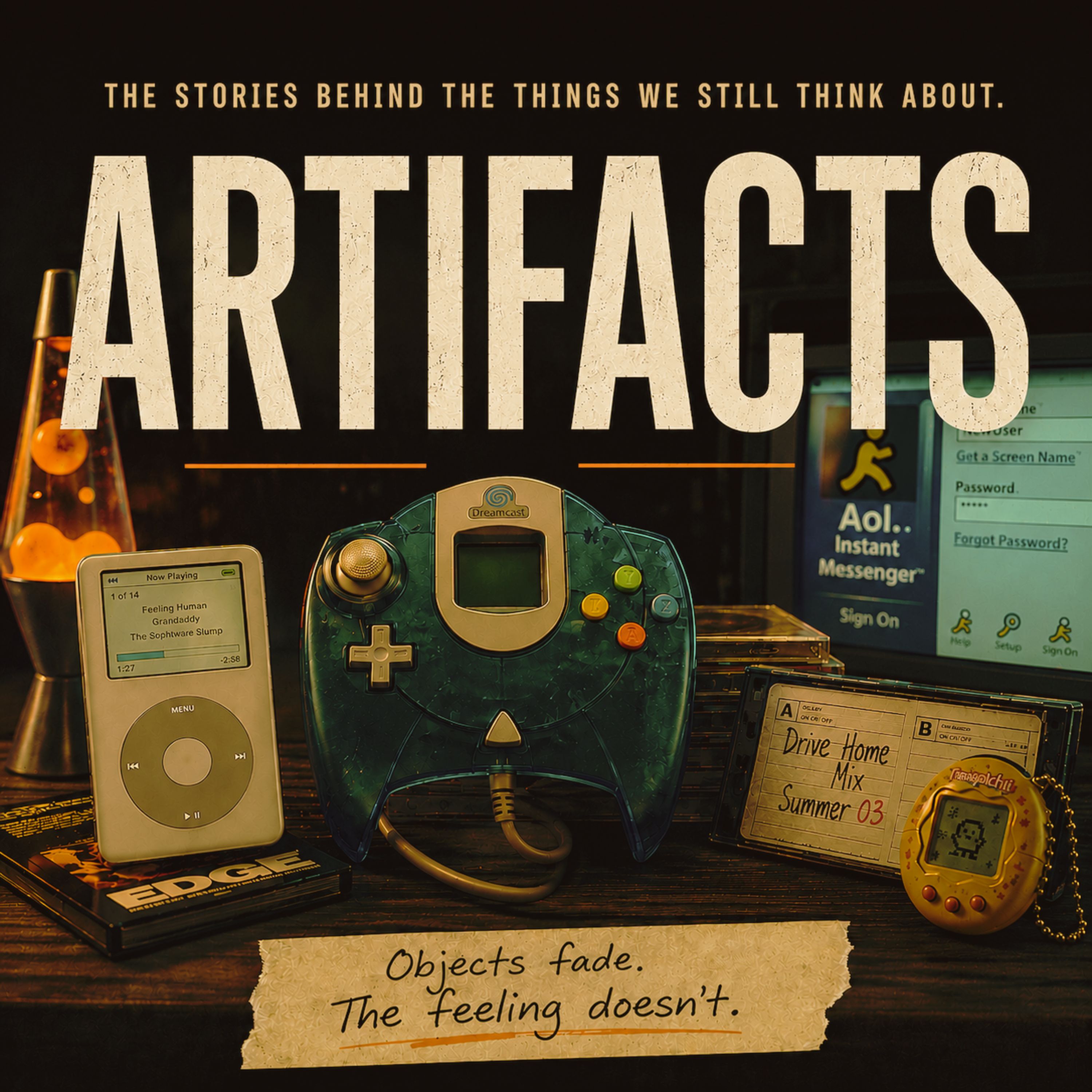
In this episode of Artifacts, I look at how memory cards changed the way we played and what happened when our game saves became something we could carry with us, from the early days of dedicated memory cards to the wonderfully weird Dreamcast VMU. And why, years later, those tiny cards can still take us straight back to the people and places we were when we used them.
Get Involved
If you enjoy Artifacts, you can support it with either a one-off tip, or become a monthly Archivist.
No commitment - just a simple way to say thanks. Show your support here.
If you enjoy the show, I'd love for you to leave a rating or review on your favourite podcast app!
And please let your friends know they can listen for free on Apple Podcasts or their preferred podcast app, or online at Artifacts Podcast.
The Archive
The sister newsletter to the Artifacts podcast, sharing a story that didn't quite fit into an episode, a forgotten corner of the internet I've stumbled across, or a memory that deserves preserving before it quietly fades away.
Products I Use for Artifacts
Note: these may contain affiliate links, so I get a small percentage of any product you buy when using my link.
My equipment:
- RODE NT1-A large diaphragm condenser mic
- Rodecaster Pro II audio production studio
- Sony MDR-7506 Studio Monitor Headphones
- Elgato Wave Mic Arm Low Profile
Recommended resources:
Transcript
I still have a Dreamcast VMU somewhere. I know I've got at least one,
Speaker:probably two, in a box somewhere with other old gaming stuff.
Speaker:And I couldn't tell you what's on it. It might still have an old save file sitting
Speaker:there, or it might be completely empty. And the battery's definitely been dead for years.
Speaker:But even though I found it, I wouldn't throw it away. Partly because it was
Speaker:a really clever little piece of hardware, but mostly because I remember what
Speaker:it meant when I was using it.
Speaker:It wasn't just somewhere to save my games. It was the thing that held my progress,
Speaker:my characters, the hours I'd spent playing, and all these little pieces of information
Speaker:that told me I'd been there before.
Speaker:And if you grew up playing video games in the 90s, you probably had some version
Speaker:of this, whether it's a PlayStation memory card, a Dreamcast VMU,
Speaker:a Nintendo 64 cartridge with its own save battery,
Speaker:or one of the many other ways that games learned how to remember where you'd been.
Speaker:And at the time these were bigger changes than it might seem now because before
Speaker:dedicated memory cards became commonplace saving a game could be a very different experience,
Speaker:If you go back to the 16-bit era, there wasn't one universal way of saving your progress.
Speaker:Some cartridges had battery-backed memory, which meant you could turn your console
Speaker:off, come back later and find your game exactly where you'd left it.
Speaker:Games like The Legend of Zelda: A Link to the Past, and Super Metroid, could
Speaker:do this, and it was a huge improvement over having to start from the beginning every time.
Speaker:But a lot of games didn't have that luxury. Instead, you got passwords.
Speaker:You'd reach a certain point in a game and it'd give you a string of letters, numbers or symbols.
Speaker:You'd write it down and the next time you wanted to continue,
Speaker:you'd have to enter that password and hoped you'd copied it correctly.
Speaker:It worked, but it never really felt like the game was remembering you because
Speaker:a password was information you had to carry around while a save file was something
Speaker:the game carried for you.
Speaker:Memory cards changed that. The original PlayStation, for example,
Speaker:used an external memory card to store game progress instead of relying on a
Speaker:game cartridge like the previous generation.
Speaker:And that sounds like a fairly minor thing when it comes to convenience,
Speaker:but think about what it meant in practice.
Speaker:You didn't have to remember a password. You didn't have to copy down a code from the TV screen.
Speaker:You didn't have to hope you'd written down every character correctly.
Speaker:You could simply save the game, turn the console off, and come back later.
Speaker:And because the card was separate from the game itself, it could travel with you.
Speaker:Your game was on the disc, but your progress was in your pocket,
Speaker:and that was a pretty big change.
Speaker:It also used a completely new little ritual, though. You'd finish playing,
Speaker:choose save, select a slot, and wait while the console wrote the data.
Speaker:And there was something reassuring about seeing that file appear on the screen.
Speaker:It had a name, a date, maybe a little picture or icon representing the game.
Speaker:But it was proof that the time you'd just spent playing had been recorded.
Speaker:And now the memory card wasn't just storage it was a record of your life inside those games.
Speaker:Maybe it contained a character you spent 20 hours developing.
Speaker:Maybe it was a save from the game you'd finally beaten after weeks of trying.
Speaker:Or maybe it contained a football season you'd played through with your friends,
Speaker:or a game you hadn't finished but weren't ready to give up on.
Speaker:The card didn't know any of that. As far as it was concerned,
Speaker:they were just files. But you knew what they represented.
Speaker:And then the Dreamcast came along, and Sega did something that made the whole
Speaker:idea even more interesting.
Speaker:The Dreamcast had the VMU, the visual memory unit.
Speaker:At first glance, it's just a memory card. You could use it to save your games,
Speaker:just like you would with other consoles.
Speaker:But it had its own little LCD screen, buttons, speaker and a battery.
Speaker:And it could also do things independently of the Dreamcast.
Speaker:Depending on the game, the VMU could show you information while you were playing,
Speaker:display maps or statistics, and in some cases become part of the game itself.
Speaker:And it could also be removed from the controller and used separately,
Speaker:often with its own little mini-games.
Speaker:That made it feel less like a storage device and more like a tiny companion to the console.
Speaker:And I think that's why the VMU in particular sticks in my mind more than a lot of other memory cards.
Speaker:It had a personality. You could look at it, you could hold it,
Speaker:it made little noises, and you could see information on screen.
Speaker:It was still storing your game saves, but it didn't feel like a blank piece
Speaker:of plastic just doing a job somewhere inside the machine.
Speaker:Instead, it felt like an object. And that matters when we're talking about artifacts.
Speaker:The VMU also made the idea of a save file slightly more physical.
Speaker:You could have different VMUs for different things. You could move them between
Speaker:controllers, take one to a friend's house, look through files and see what was on there.
Speaker:The storage became something you managed. And that management could lead to
Speaker:some surprising emotions.
Speaker:Because when you run out of space, you'd have to open the memory card menu and
Speaker:look at old saves, trying to decide what was worth keeping.
Speaker:Maybe it was a particular game that you hadn't played for years.
Speaker:Maybe you'd finished it.
Speaker:Maybe you knew you'd never go back. But deleting that save still felt a little uncomfortable.
Speaker:And that wasn't logical, because you weren't deleting the game.
Speaker:You could put the disc back in whenever you wanted.
Speaker:Instead, you were deleting a record of where you'd been.
Speaker:And that's something passwords never really gave you. A password could tell
Speaker:you that you'd reached level 27, or that you'd unlocked a particular part of a game.
Speaker:But it wasn't really yours. It was a key that got you back into the game.
Speaker:A save file felt more personal. It had a name. It had a date,
Speaker:sometimes a little icon.
Speaker:It represented your specific progress through a game, rather than simply proving
Speaker:that a certain point could be unlocked.
Speaker:And because the memory card could hold saves from multiple games,
Speaker:it gradually became a little archive of what you'd been playing.
Speaker:Not just one game, but all your games.
Speaker:And that's a subtle difference. But I think it's also part of why these things became so easy to keep.
Speaker:Of course, memory cards also introduced a new kind of panic:
Speaker:losing one, forgetting where you'd put it, accidentally overwriting a save,
Speaker:and probably the worst, corrupting the card,
Speaker:realising that the game you spent weeks or months playing was no longer there.
Speaker:There was no cloud backup waiting for you. There wasn't another copy of your
Speaker:progress sitting on a server somewhere. The card was the copy.
Speaker:If something happened to it, there was a very real chance that your progress
Speaker:was simply gone. And that made that little ritual of saving feel different.
Speaker:You weren't just clicking a button, you were trusting something.
Speaker:Eventually, that trust became invisible. Consoles started putting storage inside
Speaker:the machine itself. Hard drives gave games more room to save.
Speaker:Digital accounts meant your progress could become associated with you,
Speaker:rather than with a physical card.
Speaker:And cloud storage eventually made it possible that we keep that progress synchronised across devices.
Speaker:Today, saving a game is something you barely think about. You play,
Speaker:the game saves, you carry on.
Speaker:Sometimes you don't even know exactly where the save file lives.
Speaker:That's obviously better in almost every practical sense.
Speaker:But something's disappeared along the way, and that's the physical object that held your progress.
Speaker:And that's why finding an old memory card can make you smile in all sorts of ways.
Speaker:You can pick it up and have absolutely no idea what's on it but still know that
Speaker:it belongs to a particular period of your life.
Speaker:Maybe you remember the console it went into. Maybe you remember the games.
Speaker:Maybe you remember who you played with at the time.
Speaker:Maybe you remember the room you played in, the TV you used, the house you lived
Speaker:in, or the person you were at the time.
Speaker:None of that information is
Speaker:actually stored on the card, but the card can still take you back there.
Speaker:And that's what old artifacts do. They don't necessarily preserve the memory
Speaker:itself, they preserve the route back to it.
Speaker:And that's why I've still got that old Dreamcast VMU and so many other things from that time.
Speaker:I don't need whatever's on it. I probably couldn't even read it without digging
Speaker:out a Dreamcast anyway and finding a working battery.
Speaker:But that's not really the point. The VMU belongs to a version of my life at a specific time.
Speaker:It reminds me of the games I played, the time I had to play them,
Speaker:and the fact that these games once felt important enough that I needed this
Speaker:tiny device to make sure I didn't lose my progress.
Speaker:The VMU itself is ordinary, but the memories attached to it aren't.
Speaker:And that's the thing about the technology we leave behind. We tend to think
Speaker:the important part is what the object could do.
Speaker:The processor, the storage, the screen, the connection, the software.
Speaker:But sometimes the important part is what happened while we were using it.
Speaker:A memory card doesn't know that you spent an entire weekend trying to finish
Speaker:a game. A VMU doesn't know your age when you used it.
Speaker:A password doesn't know that you wrote it down because you couldn't bear to lose your progress.
Speaker:But you remember. And eventually, the object becomes a little piece of evidence
Speaker:that all of these things really happened.
Speaker:And that's what I like about the old memory card system from the 90s.
Speaker:They were designed to remember games, but we ended up asking them to remember much more than that.
Speaker:They remember where we'd got to, what we'd completed, the characters we'd created,
Speaker:and the worlds we spent hours exploring.
Speaker:Years later, when the console was gone and the game's sitting in a box somewhere,
Speaker:that little card can still remind us of the person who played it.
Speaker:And that's why I don't want to throw mine away. Not because I think I'll ever
Speaker:use it again, but because somewhere inside that little piece of plastic is a
Speaker:record of a time in my life I can't go back to.
Speaker:The memory isn't really on the card, but the feeling is. And maybe that's what
Speaker:makes something an artifact in the first place.
Speaker:I'm Danny Brown, and this is Artfacts.