
Why The Progress Bar Was an Experience
Enjoying the show? Support it here.
What did technology teach us about waiting? Long before instant streaming, cloud storage, and one-click downloads, there was another familiar sight: the progress bar.
Whether you were connecting to the internet over dial-up, downloading your favourite song, installing a new game, or burning the perfect mix CD, technology constantly asked us to wait. And somehow, those quiet moments became part of the experience.
In the Season Two premiere of Artifacts, Danny Brown explores how one of the most overlooked symbols of the digital age - the humble progress bar - became an unexpected reminder of anticipation, patience, and why some things felt more meaningful because they took time.
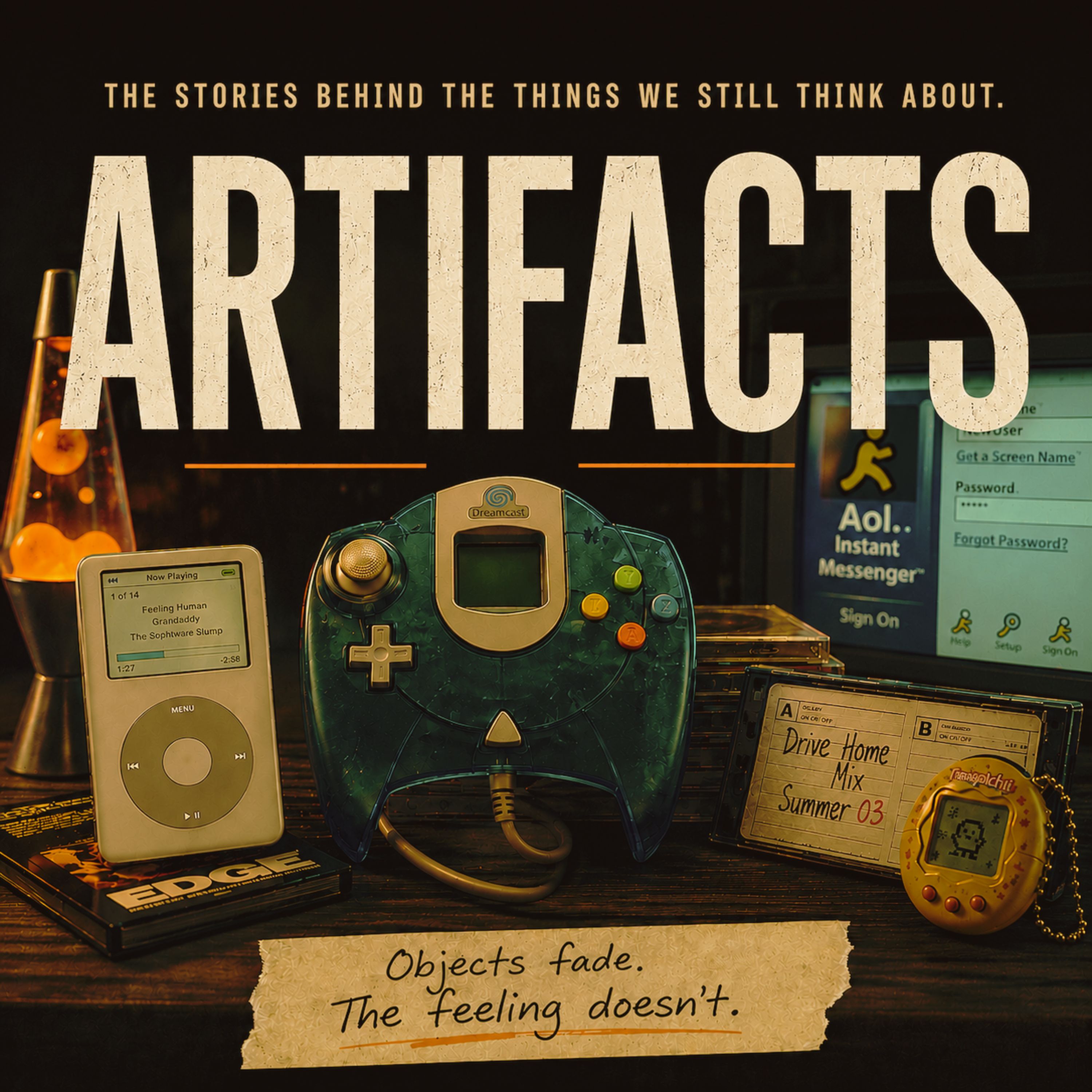
Because sometimes the objects fade.
But the feeling doesn't.
Get Involved
If you enjoy Artifacts, you can support it with either a one-off tip, or become a monthly Archivist.
No commitment - just a simple way to say thanks. Show your support here.
If you enjoy the show, I'd love for you to leave a rating or review on your favourite podcast app!
And please let your friends know they can listen for free on Apple Podcasts or their preferred podcast app, or online at Artifacts Podcast.
The Archive
The sister newsletter to the Artifacts podcast, sharing a story that didn't quite fit into an episode, a forgotten corner of the internet I've stumbled across, or a memory that deserves preserving before it quietly fades away.
Products I Use for Artifacts
Note: these may contain affiliate links, so I get a small percentage of any product you buy when using my link.
My equipment:
- RODE NT1-A large diaphragm condenser mic
- Rodecaster Pro II audio production studio
- Sony MDR-7506 Studio Monitor Headphones
- Elgato Wave Mic Arm Low Profile
Recommended resources:
Transcript
It starts with a click, then a hiss, a series of electronic chirps and static
Speaker:that somehow sounded like two machines trying to hold a conversation.
Speaker:For a few seconds, nothing happened. Then, eventually, you were online.
Speaker:Looking back, it's remarkable how much of our lives used to be spent waiting.
Speaker:Waiting for the internet to connect. Waiting for software to install.
Speaker:Waiting for a CD to finish burning.
Speaker:Waiting for a song to download.
Speaker:Waiting for a tiny green bar to crawl, almost reluctantly, towards 100%.
Speaker:And at the time, we probably hated it. But today, I wonder if we miss it more than we'd like to admit.
Speaker:Technology used to make us wait, not because it wanted to, but because it had to.
Speaker:And every wait came with a familiar companion, the progress bar.
Speaker:Sometimes it was a thin green line. Sometimes a blue block, slowly marching across the screen.
Speaker:Sometimes just a percentage, 12, 48, 83%.
Speaker:And sometimes it seemed determined to stop at 99% just to test your patience.
Speaker:It was one of the most ordinary things we ever looked at, and yet somehow it
Speaker:became one of the defining artifacts of growing up with early technology.
Speaker:We watched progress bars install games, copy files, update windows,
Speaker:rip CDs, burn CDs, download songs, transfer photographs from digital cameras.
Speaker:Simple little rectangles reminding us good things take time.
Speaker:But the progress bar wasn't really just measuring time. It was measuring anticipation.
Speaker:Think about downloading music in the late 90s. You didn't grab an entire album in seconds.
Speaker:Sometimes you waited 20 minutes for a single song. Longer if someone picked
Speaker:up the house phone halfway through.
Speaker:Installing a game could mean feeding your computer one CD after another. Disc 1, disc 2, disc 3.
Speaker:Each one followed by another progress bar.
Speaker:Each one bringing you a little closer to finally click and play.
Speaker:Even burning a mix CD had its own ritual. You chose the songs,
Speaker:got the order exactly right, and pressed burn.
Speaker:And then spent the next few minutes hoping nothing would interrupt that process.
Speaker:No bump in the desk, and no mysterious software errors. Because if that progress
Speaker:bar failed, you probably just created yourself an expensive coaster.
Speaker:Here's the funny thing though. I don't remember staring at progress bars.
Speaker:But I do remember everything that happened around them.
Speaker:Reading the game manual while the installation finished. Looking through CD
Speaker:liner notes while songs copied across. Talking to whoever else happened to be
Speaker:in the room. Making a cup of tea, grabbing a snack. Sometimes just sitting there,
Speaker:wondering what was waiting on
Speaker:the other side. But waiting wasn't empty - it gave us space. Space to think,
Speaker:space to imagine, space to build anticipation. And by the time something finally
Speaker:loaded, it already felt valuable.
Speaker:Today, progress bars are almost invisible. Streaming begins instantly.
Speaker:Photos appear the moment we press a button on our phones. Games download in the background.
Speaker:And cloud storage platforms synchronise while we get on with our day.
Speaker:Much like the Six Million Dollar Man, technology became faster, smarter and more seamless.
Speaker:And I don't think I'd want to go back. But I do think something changed.
Speaker:Not because waiting disappeared, but because anticipation did.
Speaker:When everything arrives immediately, there's very little time to imagine at
Speaker:first. And imagination makes the waiting part of the memory.
Speaker:It's strange that one of the defining symbols of an entire generation isn't
Speaker:necessarily a console, or a phone, or even a computer.
Speaker:It's a rectangle, quietly filling from left to right.
Speaker:It never asked for our attention. It never became iconic. It simply appeared
Speaker:whenever technology needed us to pause.
Speaker:And maybe that's why he stayed with us - not because we loved waiting, but because
Speaker:those little pauses became woven into the experiences we remember most.
Speaker:The first song we downloaded. The game we'd been saving up for. The family holiday
Speaker:photographs. The mixtape we'd made for someone special.
Speaker:The progress bar was never the destination - it simply reminded us that something
Speaker:exciting was almost here And perhaps that's why we still smile when we hear
Speaker:a dial-up modem or remember a download creeping slowly towards 100%.
Speaker:Not because we choose to go back, but because those quiet moments of anticipation
Speaker:became part of the story.
Speaker:Because sometimes it isn't the things we remember, it's the time we spent waiting for it.
Speaker:And sometimes the objects fade, but the feeling doesn't.
Speaker:I'm Danny Brown, and this is Artifacts.