
The Archive: Season 1 Reflections
Enjoying the show? Support it here.
Season 1 may have come to an end, but the archive is still open.
In this special bonus episode, Danny reflects on the journey that began with a Dreamcast and grew into something much bigger than a podcast about old technology.
Looking back at the stories behind internet forums, burned CDs, away messages, midnight launches, the family computer, game manuals, and the early web, hear what surprised him most while creating the season, and why the strongest memories were never really about the technology itself.
You'll also hear some of the memories listeners have shared since the show launched, along with a few hints about what's waiting inside Season 2.
Thank you for being part of the first season of Artifacts.
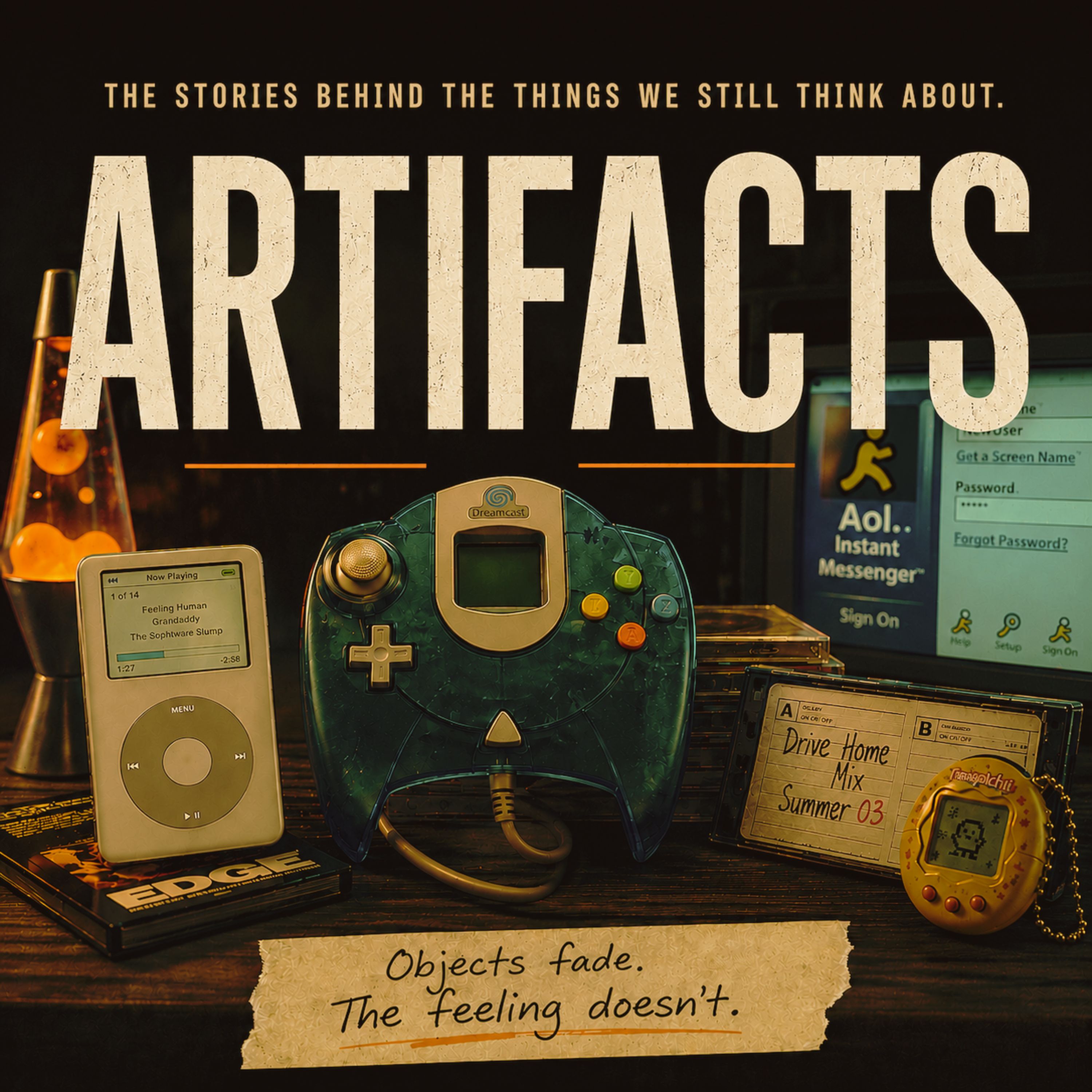
Because sometimes the objects fade.
But the feeling doesn't.
Mentioned in this episode:
- Elizabeth Swanay O'Neal, of the Branching Out Genealogy Podcast, reviews Artifacts
- Dashboard Confessional
- Why We Miss AIM Away Messages - Artifacts: Stories from the Emotional History of the Internet
- Matt Cundill: Voiceover Artist | Podcast & Radio Personality
Get Involved
If you enjoy Artifacts, you can support it with either a one-off tip, or become a monthly Archivist.
No commitment - just a simple way to say thanks. Show your support here.
If you enjoy the show, I'd love for you to leave a rating or review on your favourite podcast app!
And please let your friends know they can listen for free on Apple Podcasts or their preferred podcast app, or online at Artifacts Podcast.
The Archive
The sister newsletter to the Artifacts podcast, sharing a story that didn't quite fit into an episode, a forgotten corner of the internet I've stumbled across, or a memory that deserves preserving before it quietly fades away.
Products I Use for Artifacts
Note: these may contain affiliate links, so I get a small percentage of any product you buy when using my link.
My equipment:
- RODE NT1-A large diaphragm condenser mic
- Rodecaster Pro II audio production studio
- Sony MDR-7506 Studio Monitor Headphones
- Elgato Wave Mic Arm Low Profile
Recommended resources:
Transcript
Hey there, Danny here, and welcome back. Or perhaps, welcome to the archive.
Speaker:This isn't a new artifact, it's something a little different.
Speaker:Think of it as sitting down together after the museum's closed for the evening,
Speaker:the lights are a little dimmer, and the crowds have gone home,
Speaker:and all that's left are the stories.
Speaker:Well, that's what this bonus episode is.
Speaker:When I started Artifacts, I hoped people would enjoy revisiting the old technology
Speaker:and that a few episodes might make someone smile.
Speaker:What I didn't expect was how many people would write to tell me about the memories
Speaker:these episodes had unlocked.
Speaker:Because it turns out none of these episodes were ever really about the Dreamcast,
Speaker:or burned CDs or Away messages.
Speaker:They were about the people connected to them.
Speaker:And over the last few weeks, you've shared those stories with me.
Speaker:So I thought I'd share some of them with you.
Speaker:The first one is from Elizabeth Swanay O'Neal, co-host of the Branching Out Geneaology podcast,
Speaker:who reached out to share a video episode of the show where she reviewed Artifacts,
Speaker:specifically episode 4, Why We Miss AIM, or AOL Instant Messenger messages.
Speaker:Elizabeth talked about how this episode had made her cry, as it was through
Speaker:AIM that she stayed connected with her now husband after meeting on an online
Speaker:dating site, and this simple little messenger helped their love grow over a long
Speaker:distance until they could physically be together.
Speaker:That made me smile because it's so similar to how I met my wife.
Speaker:We met in the community forum of emo band Dashboard Confessional back in November 2005.
Speaker:And while we didn't use AIM, we did use Microsoft Messenger to chat.
Speaker:More than 20 years and two kids later, that simple connection through old tech
Speaker:was a spark that made me move from the UK to Canada, get married and start a
Speaker:life with the person who's now my wife.
Speaker:And as Elizabeth shared, it's a spark that changed her life too.
Speaker:So thank you, Elizabeth, for sharing your story.
Speaker:Then there's Matt Cundill of the Sound Off Media Company. In Matt's own words,
Speaker:each episode brings back memories I hadn't thought about in years,
Speaker:from the excitement of new gadgets to the communities and experiences that formed around them.
Speaker:What I appreciate most is that it isn't just nostalgia for nostalgia's sake.
Speaker:There's thoughtful storytelling and genuine reflection on how these Artifacts
Speaker:influenced our lives and continue to echo in today's digital world.
Speaker:I loved what Matt has to say there because it fully captures what I hoped the
Speaker:show's key message would be, and that's these artifacts belong to all of us.
Speaker:But they don't necessarily mean the same thing to all of us.
Speaker:They're personal, and that's what makes them worth talking about.
Speaker:One question I've been asked a few times is how do you decide what becomes an episode?
Speaker:And the answer is, I don't start with the technology. I start with the feeling.
Speaker:The Dreamcast became an episode because it represented hope.
Speaker:Forums represented belonging.
Speaker:Burned CDs represented connection. Away messages represented identity.
Speaker:Midnight launches represented anticipation.
Speaker:The family computer represented togetherness. Game manuals represented imagination.
Speaker:And when the internet belonged to us, well that became a story about creativity.
Speaker:The artifact is simply the doorway. The story begins when we walk through it.
Speaker:So what's next? Well, Season 2 has already taken shape.
Speaker:If Season 1 explored the objects that shaped the internet generation,
Speaker:Season 2 will explore the places and platforms that shaped us.
Speaker:We'll spend some time with old friends, and maybe revisit a few names already mentioned.
Speaker:There are still plenty of stories waiting inside the archive,
Speaker:and judging by your emails, you've given me quite a few new ones to explore too, so thank you.
Speaker:I've also created a few ways for you to be more involved with the podcast,
Speaker:so that your story can also be heard.
Speaker:The first is The Archive, the sister newsletter to the podcast,
Speaker:but it's not your usual newsletter.
Speaker:It won't be weekly and it won't just be a recap of an episode.
Speaker:Instead, think of it as sharing a story that didn't quite fit into an episode,
Speaker:or a forgotten corner of the internet that I've stumbled across,
Speaker:or a memory that deserves preserving before it quietly fades away.
Speaker:You can find out more and sign up at artifactspodcast.com forward slash newsletter.
Speaker:On top of that, I've created a special little membership option for you to help preserve the memories.
Speaker:If Artifacts has reminded you of a feeling, a memory, or a version of the internet
Speaker:you thought had disappeared, you can support the show with a one-off tip of your choosing.
Speaker:Or, for just three bucks per month, become an Archivist. You can find out more
Speaker:info or support at artifactspodcast.com forward slash support.
Speaker:And I'll be sure to leave these links in the episode show notes for you to check out later.
Speaker:There's absolutely no obligation and the podcast will always be free.
Speaker:But if you'd like to help support the time, research, writing and production
Speaker:it goes into each episode, it genuinely means a lot.
Speaker:Before we go, I just want to say thank you, whether you've listened to one episode or all of them.
Speaker:Whether you've left a review, sent an email, shared an episode or simply spent
Speaker:five to seven minutes remembering something you'd forgotten. Thank you.
Speaker:This show only works because these memories mean something to all of us.
Speaker:So, until Season 2, which drops on August 7, take care of the things that matter
Speaker:to you, even the small ones, because sometimes the objects fade,
Speaker:but the feeling doesn't.
Speaker:I'm Danny Brown, and this is Artifacts.